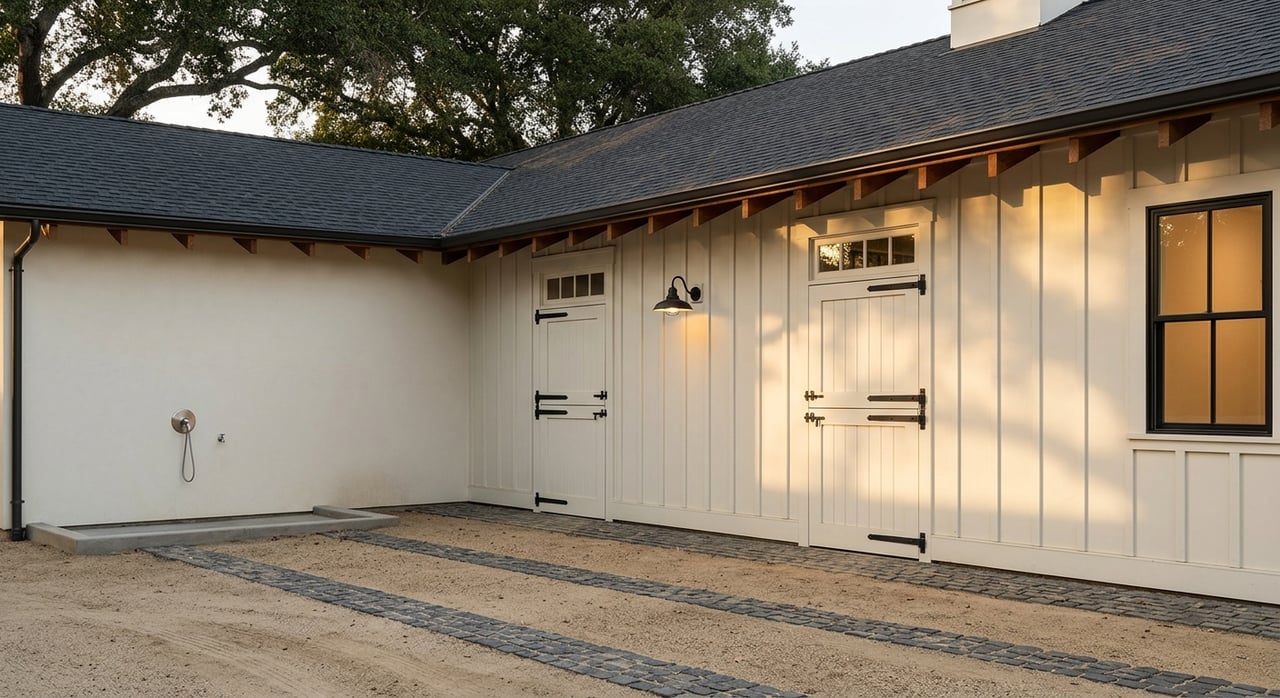
Are you deciding between a land-rich horse property and a more predictable estate setting in Danville? That choice can shape everything from your daily upkeep to what you can realistically build, add, or enjoy over time. If you are searching for an estate or equestrian property here, it helps to understand how Danville defines larger parcels, where the rules change, and what features truly support long-term use. Let’s dive in.
What estate-scale means in Danville
In Danville, “estate property” is not just a casual label. The town’s planning framework treats higher-acreage housing as a range of property types that includes Country Estates, Rural Residential, and single-family districts such as R-40, R-65, and R-100.
Those zoning categories matter because they set the baseline for lot size and development expectations. Danville’s zoning table lists minimum lot areas of 40,000, 65,000, and 100,000 square feet in the R-40, R-65, and R-100 districts, which gives you a practical starting point when comparing inventory.
The town’s general planning documents also place real value on preserving small-town character, scenic beauty, and open-space character in these larger-lot areas. That means estate buying in Danville is often as much about land use and setting as it is about the home itself.
Why parcel context matters
Not all larger homes in Danville offer the same ownership experience. Some properties are part of semi-rural areas where lot layout, hillsides, and horse facilities play a major role in day-to-day use.
For example, the El Cerro planning subarea is described by the town as Danville’s largest semi-rural area. It includes oak-studded hillsides, narrow rural roads, prominent views, and a planning direction that preserves 40,000-, 65,000-, and 100,000-square-foot lot patterns and horse setups.
By contrast, the Crow Canyon Country Club subarea reflects a very different model. Danville describes it as a built-out gated golf-course community with shared recreation, underground utilities, sidewalks, curbs, gutters, and little expected change through 2030.
Choose your estate lifestyle model
In practice, many buyers in Danville are weighing two different estate lifestyles. One is amenity-rich and built-out. The other is land-rich and maintenance-intensive.
A country-club style estate may offer more predictable surroundings and a lower land-management burden. A rural-feeling parcel may offer horse facilities, views, and open-space character, but it often comes with more upkeep, more planning review, and greater wildfire-readiness responsibilities.
Before you focus only on finishes or square footage, ask yourself how you want to live on the property. Your best fit depends on your routine, your tolerance for site maintenance, and whether you expect to make future improvements.
Quick comparison for buyers
Buyer priority | Built-out estate setting | Rural or equestrian setting |
|---|---|---|
Day-to-day upkeep | Typically more predictable | Often more hands-on |
Infrastructure pattern | More established | Can require closer review |
Horse setup potential | Usually limited | Often stronger fit |
Land flexibility | More constrained | May offer more usable outdoor options |
Wildfire readiness needs | Still important | Often a bigger planning factor |
Check zoning before you write an offer
If you are buying for horses, expansion, or guest space, do not assume the parcel supports your plans just because the lot looks large. Danville advises buyers and permit applicants to confirm the property’s zoning through Danville Pioneer or the town’s zoning map.
You should also verify whether the address is actually within the Town of Danville or in unincorporated Contra Costa County. That detail can change which rules and review processes apply.
Agricultural and rural residential uses
Danville’s public FAQ explains that the A-2 General Agricultural District allows one detached single-family dwelling on each parcel, along with accessory structures and uses that are normally auxiliary to it by right. The same FAQ also states that the town’s General Plan and zoning districts for Agricultural and Rural Residential land uses permit residential uses.
That is helpful, but it is not a substitute for parcel-specific review. A property may appear ideal for equestrian use, yet still require careful confirmation of legal capacity, setbacks, permits, and any site constraints.
Review approvals for future improvements
For estate and equestrian buyers, one of the biggest mistakes is focusing only on the current house. In Danville, future improvements can trigger a range of approvals depending on the parcel, the topography, and the scope of work.
Development Plan approval is required for new home construction in subdivisions, some vacant residential parcels, and development within scenic hillside and major ridgeline areas. If you are evaluating a parcel with slope, views, or hillside exposure, this should be part of your early diligence.
Accessory structures need real review
On larger parcels, buyers often think ahead about barns, workshops, detached garages, carports, gazebos, or additional living space. Danville does not treat those additions casually.
The town states that a building permit is required for accessory structures over 120 square feet, and those structures still must meet zoning and building requirements. The Permit Center also notes that CCCSD review and stamp are required for many projects that add or change attached or detached structures, including decks, gazebos, ADUs, and carports.
Grading can be a major factor
On estate parcels, the land itself may drive the feasibility and cost of your plans. Danville requires a grading permit for work involving cut or fill greater than three feet, and the town also flags projects that move more than 100 cubic yards of material.
If you are considering arenas, expanded pads, driveways, or hillside changes, grading review should be part of your upfront evaluation. A beautiful lot is not always a simple lot.
Understand utilities and service coordination
Utilities can feel straightforward in a typical subdivision, but larger properties often deserve a closer look. Danville’s utilities page notes that water and sewer are handled through outside vendors or contracted services.
The Permit Center also identifies CCCSD and EBMUD among the main outside agencies relevant to permits. For buyers, this means utility coordination is part of the due diligence process, especially if you plan to expand structures or modify the site.
Consider ADUs for flexibility
If you need space for guests, caregivers, or staff, an ADU strategy may be part of your search. Danville allows ADUs and JADUs in many residential contexts.
The town notes that a JADU can be up to 500 square feet, and that ADUs rented as dwellings must be rented for terms longer than 30 days. If flexible living space is important to you, confirm what already exists on the property and what may be possible under current rules.
Evaluate equestrian fit beyond the barn
A horse property is only as functional as its daily setup. If you are buying for equestrian use, the outdoor layout, drainage, shelter, and maintenance systems deserve as much attention as the residence.
UC Davis guidance on California horse care says horses should have access to clean water at least twice per day, preferably continuously, receive adequate feed, and have shelter and protection from weather. That framework helps you evaluate whether a property supports real daily care, not just the appearance of equestrian use.
Look at usable space, not just acreage
Total acreage can be misleading. A parcel may be large on paper but less useful if slopes, layout, or access limit turnout and exercise areas.
For confined horses, the UC Davis guide gives example stall sizes by horse height and states that horses in minimal space should receive at least 30 minutes of turnout or 15 minutes of controlled exercise per day, unless directed otherwise by a veterinarian. That makes usable outdoor area a practical value driver.
Drainage and manure handling matter
Horse property maintenance is not only about fencing and stalls. The UC Davis guide says manure and urine should not accumulate, stalls and pens should be cleaned daily, paddocks and pastures should follow a regular manure-removal schedule, and standing water or mud should be prevented.
For buyers, this means you should study drainage, ventilation, and waste handling with the same care you give the kitchen or primary suite. These systems directly affect usability and ongoing workload.
Factor in trails, parks, and open space
Danville offers meaningful nearby recreation for buyers who value horseback access and open-space surroundings. Oak Hill Park includes a trail where visitors can hike or ride horseback.
The East Bay Regional Park District’s Las Trampas Stables offers horse boarding and riding lessons. The town also notes that Danville borders open-space systems including Las Trampas Regional Wilderness, Sycamore Valley Open Space Preserve, and Sherburne Hills Open Space Preserve.
These nearby resources can add to the appeal of an equestrian-focused purchase, especially if you want a property that complements trail access and outdoor recreation.
Make wildfire readiness part of your search
For hillside and edge-of-town parcels, wildfire planning should be part of your buying criteria from day one. Danville’s hazard resources emphasize evacuation planning, local hazard mitigation, and Community Wildfire Protection Plan materials.
CAL FIRE states that wildfire readiness combines home hardening with 100 feet of defensible space around the home, or to the property line, whichever is closer. On a larger parcel, that can affect landscaping choices, maintenance routines, and your long-term ownership costs.
What supports long-term value
In Danville’s estate niche, long-term value is often supported by three practical factors: usable acreage, clear legal capacity, and low-friction maintenance. These are the details that can shape both enjoyment and resale.
Because Danville’s rules place real emphasis on lot layout, utility coordination, grading feasibility, and the legality of accessory structures, buyers benefit from looking past surface appeal. The right property is not just impressive. It is functional, supportable, and aligned with how you want to live.
If you are comparing options, a thoughtful approach helps you separate a property that merely looks the part from one that truly works for your goals. That is especially important in a market where estate inventory can span both polished built-out communities and more rural, maintenance-intensive parcels.
When you want a patient, detail-driven advisor to help you evaluate estate or equestrian opportunities in Danville, Joe Sabeh offers refined guidance backed by local market insight and disciplined representation.
FAQs
What qualifies as an estate property in Danville?
- In Danville, estate-scale properties are often found in R-40, R-65, R-100, Country Estates, Rural Residential, and Agricultural contexts, with lot size and planning rules varying by zoning.
What should you verify before buying a Danville horse property?
- You should confirm zoning, jurisdiction, legal uses, permit requirements, grading constraints, utility coordination, and whether the layout truly supports horse care and turnout.
Are accessory structures allowed on Danville estate parcels?
- Accessory structures may be allowed, but Danville requires a building permit for structures over 120 square feet, and zoning and other agency review may still apply.
Can you add an ADU to a Danville estate property?
- Danville allows ADUs and JADUs in many residential contexts, with JADUs up to 500 square feet, but you should confirm parcel-specific requirements before making plans.
Why does wildfire readiness matter for Danville estate buyers?
- Larger and hillside parcels may require more ongoing vegetation management, evacuation planning, and defensible space, all of which can affect daily ownership and future costs.